
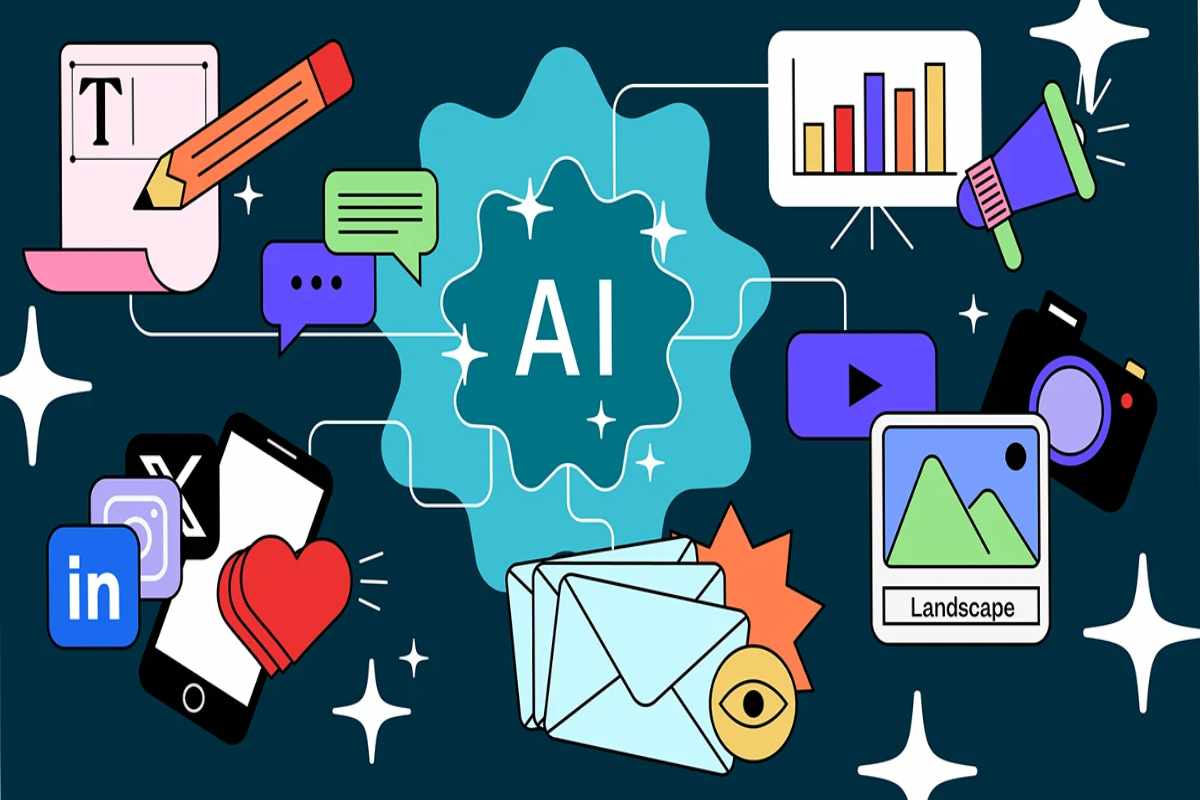
Artificial intelligence is no longer a “nice to have” for small businesses—it’s a competitive necessity. In 2026, AI marketing tools help small teams create content faster, run smarter campaigns, and make data‑driven decisions without hiring large marketing departments.
This guide is a direct follow‑up to our AI marketing tools cluster and focuses on what small business owners actually want to know: which tools to use, how much they cost, and which ones deliver real ROI.
Why Small Businesses Need AI Marketing Tools Now
Small businesses face three constant challenges: limited time, limited budget, and limited people. AI marketing tools address all three.
Instead of manually writing content, segmenting email lists, or analyzing campaign performance, AI automates repetitive work and improves outcomes using data. In 2026, most platforms combine generative AI + predictive analytics, meaning tools don’t just execute tasks—they recommend next actions.
Key benefits include:
- Faster content creation for blogs, ads, and social media
- Smarter email and CRM automation
- Better ad targeting and budget optimization
- Clearer insights tied to real business KPIs, not vanity metrics
For small businesses competing against larger brands, AI closes the execution gap.
The Small Business Guide to AI Marketing Tools 2026
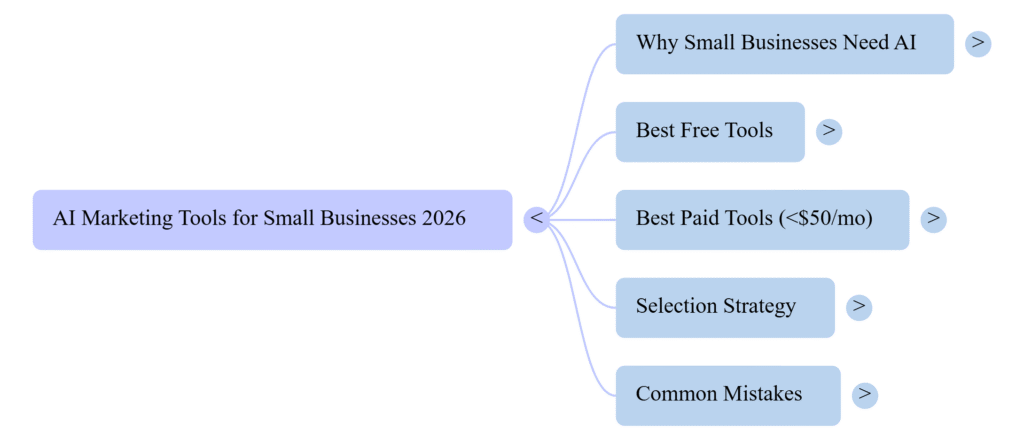
Best Free AI Marketing Tools for Small Businesses
Free AI tools are ideal for startups and solopreneurs testing automation without upfront investment.
1. ChatGPT (Free Plan)
Best for: Content ideation, copy drafts, customer responses
ChatGPT remains one of the most versatile free AI tools. Small businesses use it to:
- Generate blog outlines and social captions
- Draft email campaigns
- Create chatbot‑style FAQ responses
Limitations exist on usage and advanced features, but for early‑stage marketing, it’s extremely powerful.
2. Canva AI
Best for: Social media and visual content
Canva’s AI features (Magic Write, design suggestions, background removal) allow non‑designers to produce professional visuals quickly. It’s especially useful for Instagram, LinkedIn, and ad creatives.
3. Mailchimp AI (Free Tier)
Best for: Email subject lines and send‑time optimization
Mailchimp’s free plan includes basic AI‑powered subject line suggestions and audience insights—perfect for small email lists just getting started.
4. Tidio AI Chatbot (Free Plan)
Best for: Website chat and lead capture
Tidio offers a free AI chatbot for basic customer queries, lead qualification, and support automation—ideal for service‑based small businesses.
Best Paid AI Marketing Tools Under $50/Month
Paid tools unlock automation, integrations, and performance optimization that free plans can’t deliver.
1. Jasper AI
Best for: Marketing copy and long‑form content
Jasper is designed specifically for marketers. It excels at:
- Blog posts and landing pages
- Ad copy for Google and social platforms
- Brand‑voice consistency across channels
Pricing typically starts under $50/month for individuals.
2. HubSpot AI (Starter Plans)
Best for: CRM + marketing automation
HubSpot’s AI tools integrate email marketing, CRM, and analytics in one platform. Small businesses benefit from:
- AI‑generated email copy
- Predictive lead scoring
- Campaign performance insights
Starter plans are affordable and scalable.
3. Brevo (Formerly Sendinblue)
Best for: Email + SMS marketing
Brevo combines AI‑driven email content, segmentation, and automation with competitive pricing. It’s a strong alternative to Mailchimp for growing lists.
4. AdCreative.ai
Best for: Paid ad creatives
This tool uses AI to generate high‑converting ad visuals and copy for Facebook, Instagram, and Google Ads. It’s especially valuable for small businesses running paid ads without a creative team.
5. Surfer SEO
Best for: AI‑assisted SEO content
Surfer combines AI writing with real‑time SEO optimization, helping small businesses rank content faster without deep technical SEO knowledge.
How to Choose the Right AI Tool for Your Business
Choosing AI tools isn’t about using everything—it’s about solving your biggest bottleneck.
Ask these questions:
- Do I need content creation, automation, or analytics first?
- Does this tool integrate with my existing stack (CRM, email, CMS)?
- Can I measure ROI using clear KPIs?
Service businesses often benefit most from AI chatbots and CRM tools, while ecommerce brands gain more from ad optimization and email automation.
Tie every tool back to measurable goals outlined in your digital marketing KPI framework.
Common Mistakes Small Businesses Make with AI Marketing Tools
AI tools are powerful—but misuse is common.
Over‑automation without strategy
AI amplifies your strategy. If the strategy is weak, automation only scales poor results.
Ignoring human review
AI‑generated content still needs editing for brand voice, accuracy, and trust.
Tracking vanity metrics
Clicks and impressions matter less than conversions, revenue, and retention. Always align AI tools with business KPIs.
Using too many tools at once
More tools ≠ better marketing. Start with one or two, master them, then expand.
Final Thoughts
In 2026, the most successful small businesses won’t be the ones with the biggest budgets—but the ones using AI tools strategically.
Start small, measure impact, and scale what works. When paired with clear KPIs and a focused marketing strategy, AI becomes a growth multiplier—not just another shiny tool.