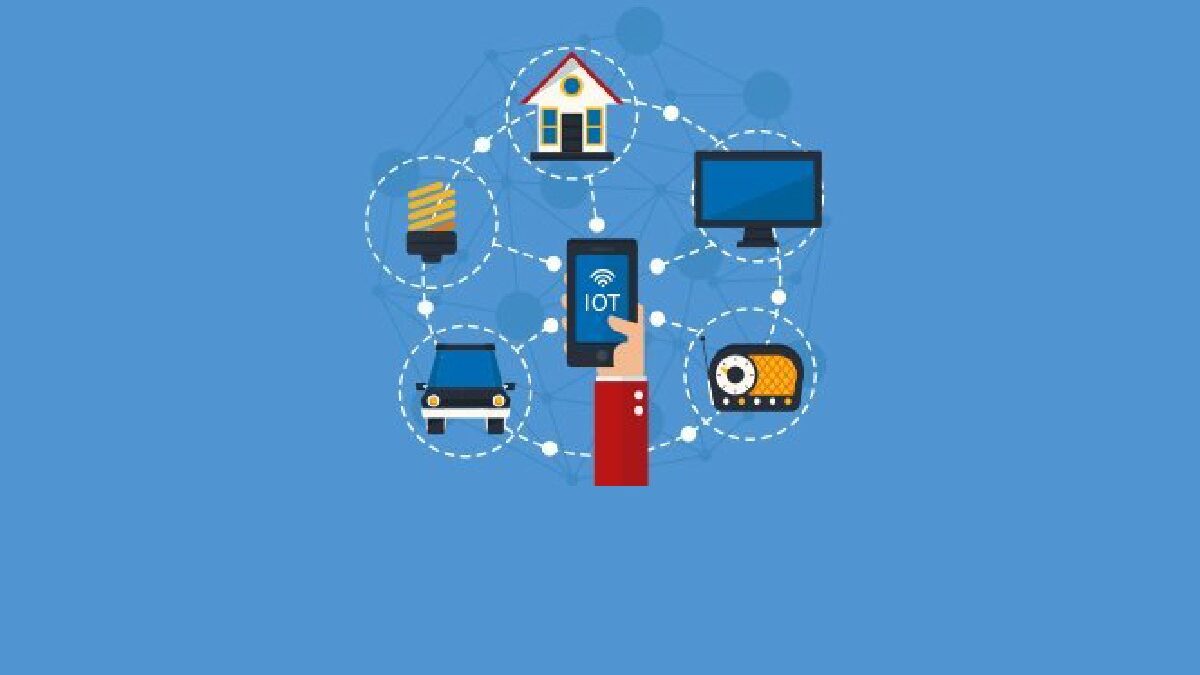
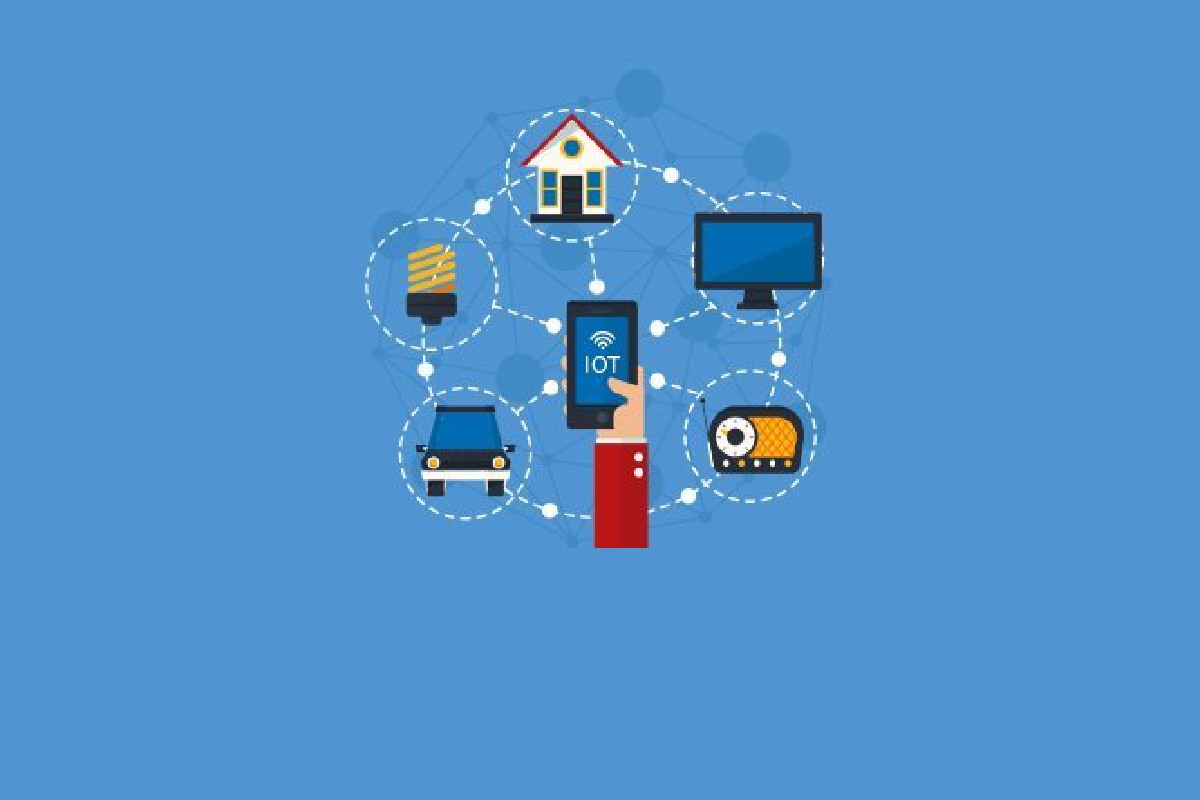
A career in the Internet of Things (IoT) is no longer niche or experimental. In 2026, IoT professionals are in demand across industries such as healthcare, manufacturing, smart cities, automotive, agriculture, and consumer technology. As billions of devices continue to connect to the internet, companies need skilled talent to design, build, secure, and maintain IoT systems.
This guide explains what an IoT career looks like today, the core skills you need, the best ways to learn, which projects attract recruiters, and how to land your first IoT job or internship.
Table of Contents
What Is an IoT Career?
An IoT career focuses on building systems where physical devices collect data, communicate over networks, and interact with software platforms to automate decisions or processes.
Unlike traditional software roles, IoT careers sit at the intersection of hardware, software, networking, and cloud computing. Professionals in this field often work with sensors, microcontrollers, embedded systems, APIs, and real-time data pipelines.
Common IoT job roles include:
-
IoT Developer
-
Embedded Systems Engineer
-
IoT Solutions Architect
-
Firmware Engineer
-
Industrial IoT Engineer
-
IoT Security Specialist
Many of these roles overlap with robotics and automation, making IoT a natural entry point into adjacent fields such as smart manufacturing and intelligent systems, as explored in.
For a broader view of available roles and hiring trends, see
/iot-jobs/ and
/iot-jobs-careers/.
Core Skills You Need (Hardware, Software, Cloud, Security)
A successful IoT career requires a balanced skill set. Employers rarely expect mastery in everything, but they do expect functional knowledge across four core areas.
Hardware and Embedded Systems
This is the foundation of IoT.
Key skills include:
-
Understanding microcontrollers (Arduino, ESP32, Raspberry Pi)
-
Working with sensors and actuators
-
Reading schematics and basic electronics
-
Embedded C/C++ fundamentals
-
Power management and device constraints
Even software-focused IoT roles benefit from basic hardware literacy.
Software and Programming
Programming is central to every IoT career path.
Important skills include:
-
Python for prototyping and data handling
-
C/C++ for firmware development
-
JavaScript for dashboards and APIs
-
REST APIs and MQTT communication
-
Linux fundamentals
If you are new to coding, start with core programming concepts first using structured resources like those discussed in.
Cloud and Data Platforms
Modern IoT systems rely heavily on the cloud.
You should understand:
-
IoT cloud platforms (AWS IoT, Azure IoT, Google Cloud IoT)
-
Device authentication and messaging pipelines
-
Data storage and visualization
-
Serverless functions and event-driven architectures
Cloud skills often differentiate entry-level candidates in interviews.
Security and Networking
Security is no longer optional in IoT.
Essential concepts include:
-
Secure device provisioning
-
Encryption and authentication
-
Network protocols (TCP/IP, HTTP, MQTT, CoAP)
-
OTA (over-the-air) firmware updates
-
Common IoT security vulnerabilities
Even basic security awareness significantly improves employability.
Best Courses and Resources to Learn IoT
In 2026, employers care more about practical skills than certifications alone. The best learning paths combine theory with hands-on projects.
Online Learning Platforms
Strong starting points include:
-
University-backed IoT specialization courses
-
Embedded systems and microcontroller bootcamps
-
Cloud provider IoT training modules
-
Project-based learning platforms with labs
Look for courses that include real hardware interaction, not just simulations.
Documentation and Communities
Many IoT professionals learn directly from:
-
Official Arduino and Raspberry Pi documentation
-
Cloud IoT platform docs
-
GitHub repositories and open-source projects
-
Developer forums and IoT communities
Learning to read technical documentation is a critical career skill in itself.
Portfolio Projects That Impress Recruiters
In an IoT career, projects matter more than resumes. Recruiters want proof that you can build working systems.
Beginner-Friendly Project Ideas
Start with small, complete projects:
-
Smart temperature and humidity monitoring system
-
IoT-based home automation prototype
-
Sensor data logging to the cloud
-
Simple smart irrigation system
These demonstrate end-to-end understanding.
Intermediate and Advanced Projects
To stand out in 2026, aim for projects that show real-world thinking:
-
Secure IoT device with authentication and encryption
-
Real-time dashboard with alerts and analytics
-
Edge computing project with local decision-making
-
Predictive maintenance system using sensor data
Document each project clearly on GitHub. Include architecture diagrams, code explanations, and deployment steps.
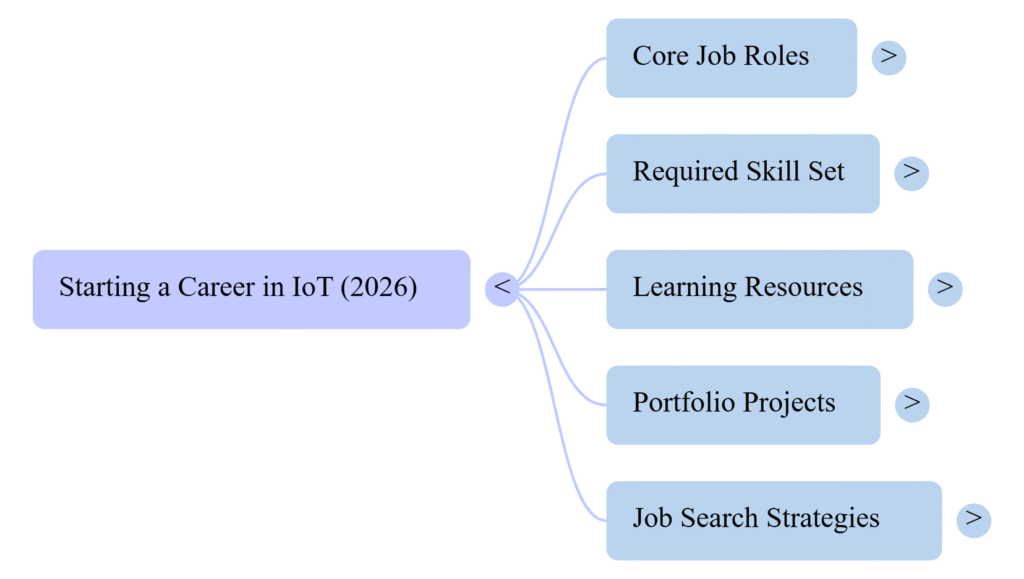
The 2026 IOT Career Blueprint
How to Find Entry-Level IoT Jobs and Internships
Breaking into an IoT career requires a targeted approach. Generic job applications rarely work.
Where to Look
Focus on platforms and companies actively hiring IoT talent:
-
Dedicated IoT job boards
-
Hardware startups and system integrators
-
Manufacturing and industrial automation firms
-
Smart city and energy companies
Curated listings on
/iot-jobs/ and
/iot-jobs-careers/
can help narrow your search.
How to Apply Strategically
Successful candidates usually:
-
Tailor resumes to highlight projects, not just skills
-
Link GitHub repositories and demos
-
Emphasize cross-disciplinary knowledge
-
Apply for internships, apprenticeships, and trainee roles
Even entry-level IoT jobs often value curiosity and problem-solving over years of experience.
Networking and Community Involvement
Joining IoT meetups, hackathons, and online communities significantly improves job prospects. Many first roles come through referrals or open-source contributions rather than job portals.
Final Thoughts
Starting a career in IoT in 2026 is both challenging and rewarding. The field demands continuous learning, but it also offers diverse career paths across industries. By building strong fundamentals in hardware, programming, cloud platforms, and security, creating practical projects, and targeting the right job opportunities, you can position yourself competitively in the IoT job market.
An IoT career is not about knowing everything; it is about understanding how systems connect, communicate, and scale. With the right skills and portfolio, your first IoT role is a realistic and achievable goal.