
Table of Contents
Why IoT Jobs Are in Demand in 2025
IoT (Internet of Things) continues to grow rapidly in 2025 because industries are shifting toward automation, smart devices, and data-driven operations. Companies are using IoT for efficiency, safety, and real-time insights, which creates huge demand for skilled professionals.
Key reasons for rising IoT jobs:
– Increasing use of smart devices in homes, factories, hospitals, and cities
– Growth of 5G and edge computing
– More data being generated from sensors and connected devices
– Need for secure and scalable IoT systems
– Expansion of Industry 4.0 and smart manufacturing
As companies adopt connected technologies, the demand for engineers, developers, and analysts continues to increase.
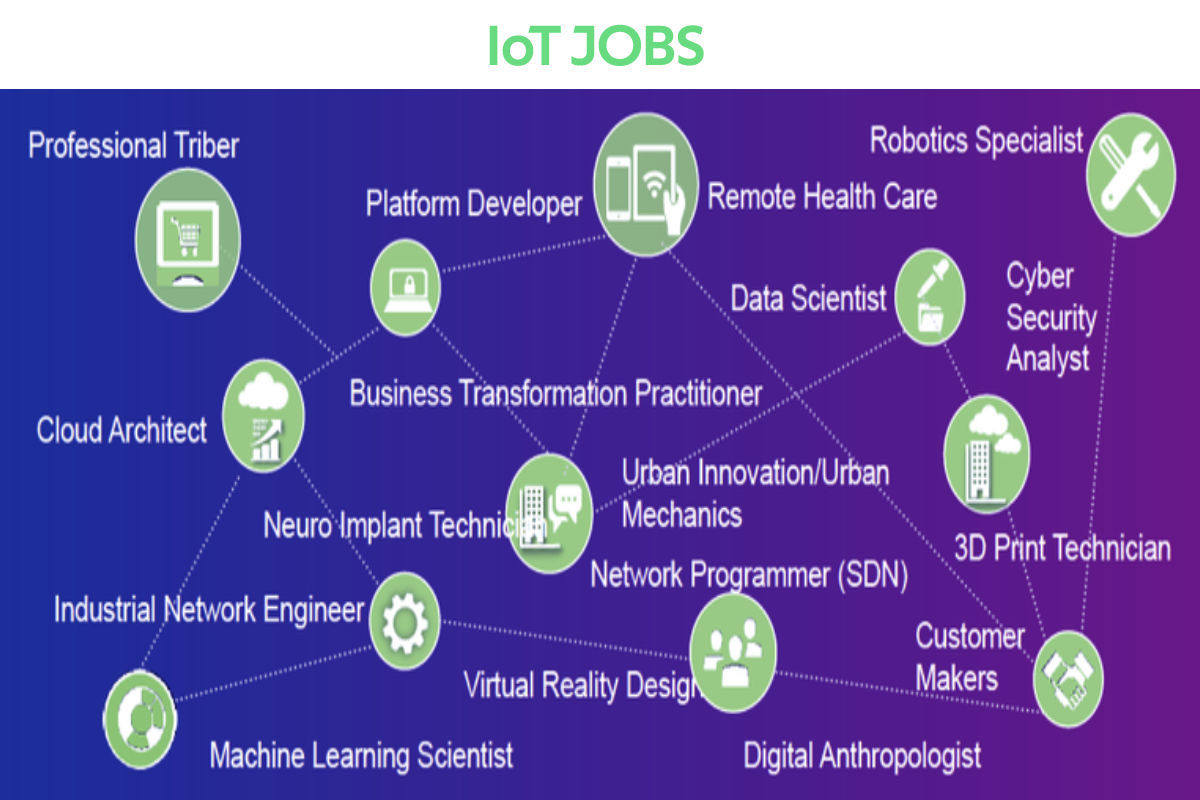
Popular IoT Job Roles (Engineer, Architect, Data Analyst, Security, etc.)
IoT careers cover hardware, software, networking, and cloud. Some of the most in-demand roles include:
1. IoT Engineer
Builds IoT devices, integrates sensors, and manages communication between hardware and cloud platforms.
2. Embedded Systems Engineer
Programs microcontrollers like ESP32, Arduino, STM32, and Raspberry Pi.
3. IoT Software Developer
Develops backend applications, APIs, automation logic, and dashboards.
4. IoT Cloud Engineer
Works with AWS IoT, Azure IoT Hub, and Google Cloud IoT for data storage, processing, and analytics.
5. IoT Architect
Designs large-scale IoT systems, chooses hardware, communication technologies, and ensures reliability.
6. IoT Data Analyst / Data Scientist
Analyzes sensor data, builds predictive models, and extracts insights.
7. IoT Security Engineer
Protects devices, networks, and cloud services from attacks.
8. Network & Connectivity Engineer
Works with MQTT, LoRaWAN, 5G, BLE, and mesh networks.
9. Robotics & Automation Engineer
Designs intelligent machines using IoT sensors and actuators by Robotics.
These roles exist across many industries, making IoT a flexible and future-proof career path.
Skills Required for IoT Careers (Hardware, Software, Cloud, Security)
1. Hardware Skills
– Understanding of sensors and actuators
– Microcontroller programming (Arduino, ESP32)
– PCB basics and electronics fundamentals
2. Software & Programming
– Python, C/C++, JavaScript
– API development
– MQTT, CoAP, HTTP
3. Networking & Connectivity
– Wi-Fi, Bluetooth, LoRa, Zigbee
– IPv6, DNS, routing basics
– IoT communication models
4. Cloud & Data Skills
– AWS IoT Core
– Azure IoT Hub
– Google Cloud IoT
– Data analytics & dashboards
5. IoT Security
– Encryption and authentication
– Secure boot and firmware updates
– Threat detection
Bonus Skills
– AI/ML for predictive analytics
– Edge computing concepts
– DevOps basics
A combination of hardware and software skills gives candidates a strong advantage.
Average IoT Salaries and Industries Hiring
Salaries vary by location, experience, and job role.
Average Salary Ranges (2025 Estimates)
– IoT Engineer: $70,000 – $130,000
– Embedded Engineer: $60,000 – $120,000
– Cloud IoT Engineer: $90,000 – $150,000
– IoT Architect: $120,000 – $190,000
– Security Engineer: $100,000 – $160,000
– Data Scientist (IoT): $110,000 – $180,000
Top Industries Hiring in 2025
– Smart manufacturing & Industry 4.0
– Healthcare & medical devices
– Automobiles & EV systems
– Smart agriculture
– Retail & supply chain automation
– Smart home and consumer electronics
– Telecom companies
– Energy & utilities (smart grids, metering)
IoT roles are offered worldwide, creating opportunities for both freshers and experienced professionals.
Step-by-Step Learning Path to Get an IoT Job
Step 1: Start with Basics
– Learn sensors, microcontrollers, and basic electronics
– Understand IoT communication and architecture
Step 2: Learn Programming
– C/C++ for embedded devices
– Python for cloud, automation, and analytics
Step 3: Build Mini IoT Projects
Examples:
– Smart temperature monitor
– Home automation
– Soil moisture IoT device
Step 4: Learn Networking & Communication Protocols
– MQTT, CoAP, LoRa, BLE
– IP addressing and routing
Step 5: Move to Cloud IoT Platforms
– AWS IoT Core tutorials
– Azure IoT Hub
– Google Cloud IoT
Step 6: Learn Data Analytics
– Dashboards
– Basic machine learning
Step 7: Understand IoT Security
– Securing firmware
– Encryption
– Access control
Step 8: Build a Portfolio
Upload projects on GitHub, LinkedIn, or a personal website.
Step 9: Apply for Internships and Entry-Level Jobs
Build experience through hands-on roles.
Best Resources: Courses, Certifications, and Projects
Courses & Certifications
– AWS Certified Cloud Practitioner (with IoT modules)
– Azure IoT Developer Specialty
– Google Cloud IoT trainings
– Coursera: Introduction to IoT
– Udemy: ESP32 IoT Masterclass
– edX: IoT System Design Courses
Practical Projects to Build
– Smart home automation using Wi-Fi
– ESP32-based health monitor
– LoRa smart agriculture prototype
– Smart energy monitoring system
– BLE-based wearable device
Tools to Practice
– Arduino IDE
– Node-RED
– Raspberry Pi OS
– ThingsBoard
– Grafana
– MQTT brokers (Mosquitto)
Hands-on practice is the fastest way to enter the IoT field.
FAQs About IoT Careers
1. Do I need a degree to get an IoT job?
No, skills and projects matter more. A degree helps but is not mandatory.
2. Is IoT difficult to learn?
It is manageable if you start step-by-step with small projects.
3. Which microcontroller should beginners use?
ESP32 or Arduino Uno are good starting points.
4. Can software developers switch to IoT?
Yes. Software developers already have an advantage with coding and APIs.
5. What pays the highest in IoT?
IoT Architect, Cloud IoT Engineer, and Security Engineer roles.
6. Is IoT a stable career?
Yes. Demand is growing in multiple industries.