
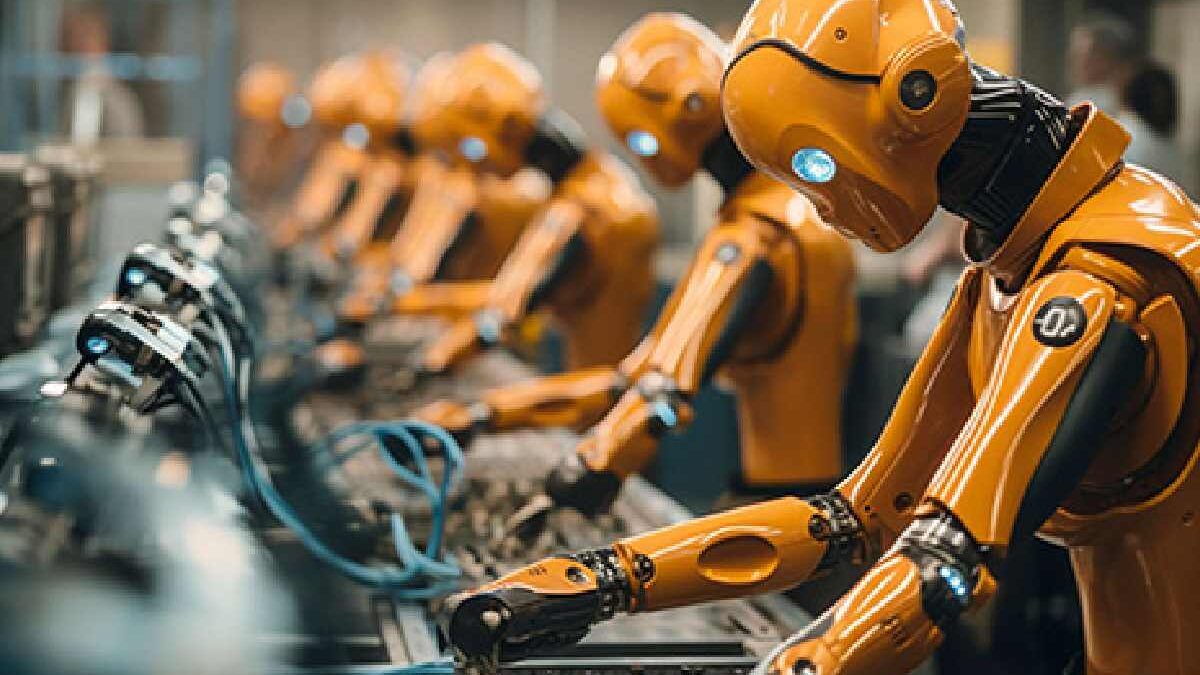

The convergence of the Internet of Things (IoT) and robotics is redefining how modern systems operate, communicate, and make decisions. As industries digitize and adopt automation at scale, IoT-connected devices and intelligent robotic systems have become central to enterprise transformation, innovation, and workforce productivity. This guide consolidates the essential concepts, technical foundations, applications, and career pathways that characterize this combined technology landscape.
The Role of IoT Architecture
Enabling Interconnection through Logical Design
Impact on Robotic Capabilities
The IOT and Robotics Handbook
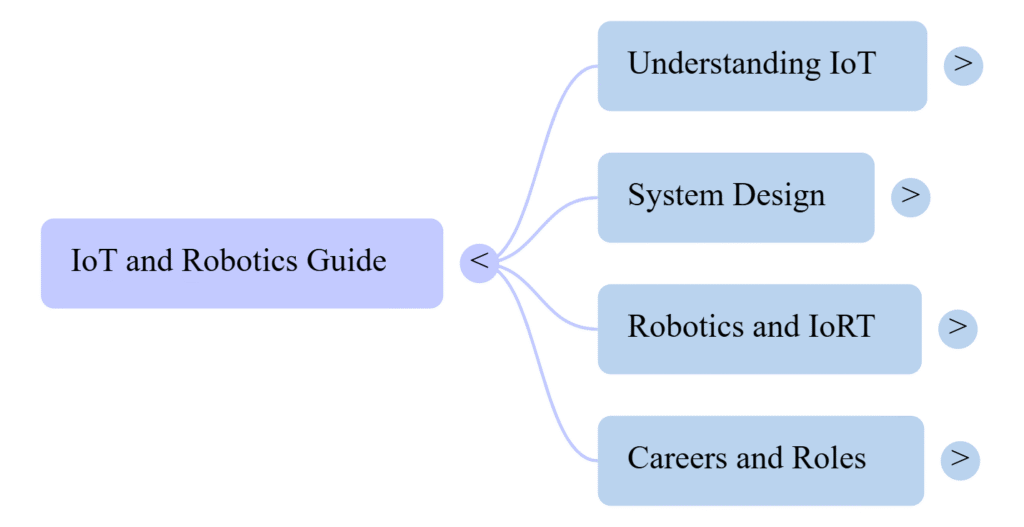
1. Understanding IoT: Components, Architecture, and Functionality
IoT refers to interconnected physical objects that collect, exchange, and process data over networks. These devices range from simple sensors to complex machines and operate through a multi-layer architecture that ensures seamless data movement.
Key Components of IoT
-
Sensors and Actuators: Capture physical parameters or trigger actions.
-
Connectivity Modules: Enable communication via Wi-Fi, Bluetooth, Zigbee, NFC, LTE, or 5G.
-
Processors and Microcontrollers: Execute operations, process signals, and run firmware.
-
Cloud Platforms: Manage data storage, analytics, and device orchestration.
-
User Interfaces: Mobile apps, dashboards, and integrated systems.
IoT Architecture
Most IoT deployments follow a structured five-layer architecture:
-
Device Layer
-
Communication Layer
-
Data Processing Layer
-
Application Layer
-
Cloud/Integration Layer
Understanding these layers is foundational for system design, optimization, and scalability.
2. Physical and Logical Design of IoT Systems
IoT design is divided into two interconnected domains: physical design and logical design. Both must align for an IoT deployment to function efficiently.
Physical Design
Physical design refers to hardware elements that perform sensing, processing, power consumption, and communication. This includes:
-
Sensor choice based on accuracy, environment, and purpose
-
Microcontroller/microprocessor selection
-
Power supply architecture
-
Physical housing and durability considerations
These decisions determine device resilience, responsiveness, and cost efficiency.
Logical Design
Logical design focuses on system behavior and communication flow. It includes:
-
Data flow models
-
Actuation logic
-
Event triggers
-
Network protocols
-
Security models and encryption frameworks
Logical design ensures IoT systems behave predictably and interact seamlessly across devices and platforms.
3. Robotics: Technology, Systems, and Integration with IoT
Robotics involves the engineering, control, and operation of machines capable of performing tasks autonomously or semi-autonomously. When enhanced with IoT connectivity, robotics becomes part of the Internet of Robotic Things (IoRT), allowing robots to sense environments, share data, and work collaboratively.
Core Elements of a Robotics System
-
Mechanical components (frames, joints, actuators)
-
Microcontrollers and control units
-
Sensors (vision, proximity, pressure, infrared)
-
Software algorithms for motion, navigation, or AI
-
Communication modules for connected operation
The integration of robotics with IoT leads to smarter, more adaptive, and more powerful machines capable of real-time decision-making.
4. IoT in Healthcare: A Leading Application Area
Healthcare is one of the most advanced adopters of IoT-enabled technologies. Connected medical devices improve patient monitoring, diagnostics, emergency response, and hospital automation.
Major IoT Healthcare Examples
-
Wearable biosensors
-
Smart patient monitoring systems
-
Connected infusion pumps
-
IoT-enabled imaging tools
-
Emergency medical tracking devices
Paired with robotics—such as surgical robots, pharmacy automation, and robotic rehabilitation tools—the healthcare ecosystem becomes more accurate, responsive, and efficient.
5. Future of IoT and Robotics Jobs
As enterprises and industries leverage automation, the demand for IoT and robotics professionals continues to grow. What’s changing is how these roles are defined: employers increasingly look for hybrid skill sets that blend hardware, software, cloud, and data intelligence.
Real-World IoT & Robotics Job Roles (With Salary Ranges)
Below are practical, in-demand roles companies are actively hiring for, along with broad global salary ranges and core skill requirements.
-
IoT Solutions Architect
Typical salary range: $90,000 – $160,000+
Key skills:
Cloud IoT platforms (AWS IoT, Azure IoT), system architecture, device integration, networking protocols, security design
Common employers: Manufacturing firms, smart infrastructure providers, enterprise SaaS companies -
Embedded Systems / Robotics Engineer
Typical salary range: $70,000 – $130,000
Key skills:
C/C++, Python, microcontrollers, firmware development, sensors, actuators, real-time operating systems (RTOS)
Common employers: Robotics startups, automotive companies, industrial automation vendors -
Automation & Robotics Programmer
Typical salary range: $75,000 – $140,000
Key skills:
PLC programming, ROS (Robot Operating System), motion control, industrial robotics, machine vision
Common employers: Manufacturing plants, logistics companies, smart factories -
IoT Security Engineer
Typical salary range: $85,000 – $150,000
Key skills:
Device security, network encryption, identity management, secure firmware updates, cloud security
Common employers: Enterprise IT teams, cybersecurity firms, critical infrastructure providers
These roles often overlap — for example, a robotics engineer may also work with IoT cloud platforms, or an IoT developer may integrate machine learning models into autonomous systems.
Why Hybrid IoT–Robotics Skills Matter
Professionals who combine embedded hardware knowledge, cloud connectivity, and intelligent automation are far more resilient to market shifts. As industries adopt smart factories, autonomous vehicles, healthcare robotics, and connected infrastructure, hybrid skill sets are becoming the default rather than the exception.
Next Steps If You Want a Job in IoT or Robotics
If you’re planning a career move or skill upgrade, focus on role clarity, hands-on projects, and ecosystem awareness:
-
Explore current roles, salaries, and skill paths in IoT careers:
👉 /iot-jobs/
👉 /iot-jobs-careers/ -
Understand how IoT and robotics roles connect with broader IT and technology careers:
👉 /information-technology-jobs/
Together, these resources help you map entry points, growth paths, and future-proof skills in one of the fastest-growing technology domains.
Conclusion
IoT and robotics represent two of the most transformative technologies of the modern era. Understanding their architecture, design principles, applications, and career prospects provides the foundation for navigating the evolving digital economy. As organizations accelerate their automation strategies, IoT-enabled robotics will drive improvements in efficiency, intelligence, and operational agility. This cornerstone guide offers a unified starting point for anyone looking to explore, deploy, or build a career in these rapidly advancing fields.